One year after launching its Strategic Plan, The Derryfield School is already seeing meaningful progress across campus. Rooted in the School’s mission and guided by community input, the Strategic Plan serves as a living roadmap, shaping the student experience, strengthening teaching and learning, and positioning Derryfield for a vibrant future.
Throughout the first year of implementation, the School focused on four key strategic initiatives: Peer Leadership, Professional Learning Communities, Digital Tools and AI Integration, and Financial Sustainability & Innovation. Together, these efforts reflect Derryfield’s commitment to preparing students for lives of purpose while ensuring the School remains innovative, sustainable, and mission-driven.
Expanding Opportunities for Student Leadership
Leadership opportunities grew significantly across both the Middle and Upper School this year. The Middle School Council was redesigned to broaden student leadership experiences for grades 6 through 8, while Homework Helpers launched as a peer-to-peer tutoring program that encourages students to support one another academically.
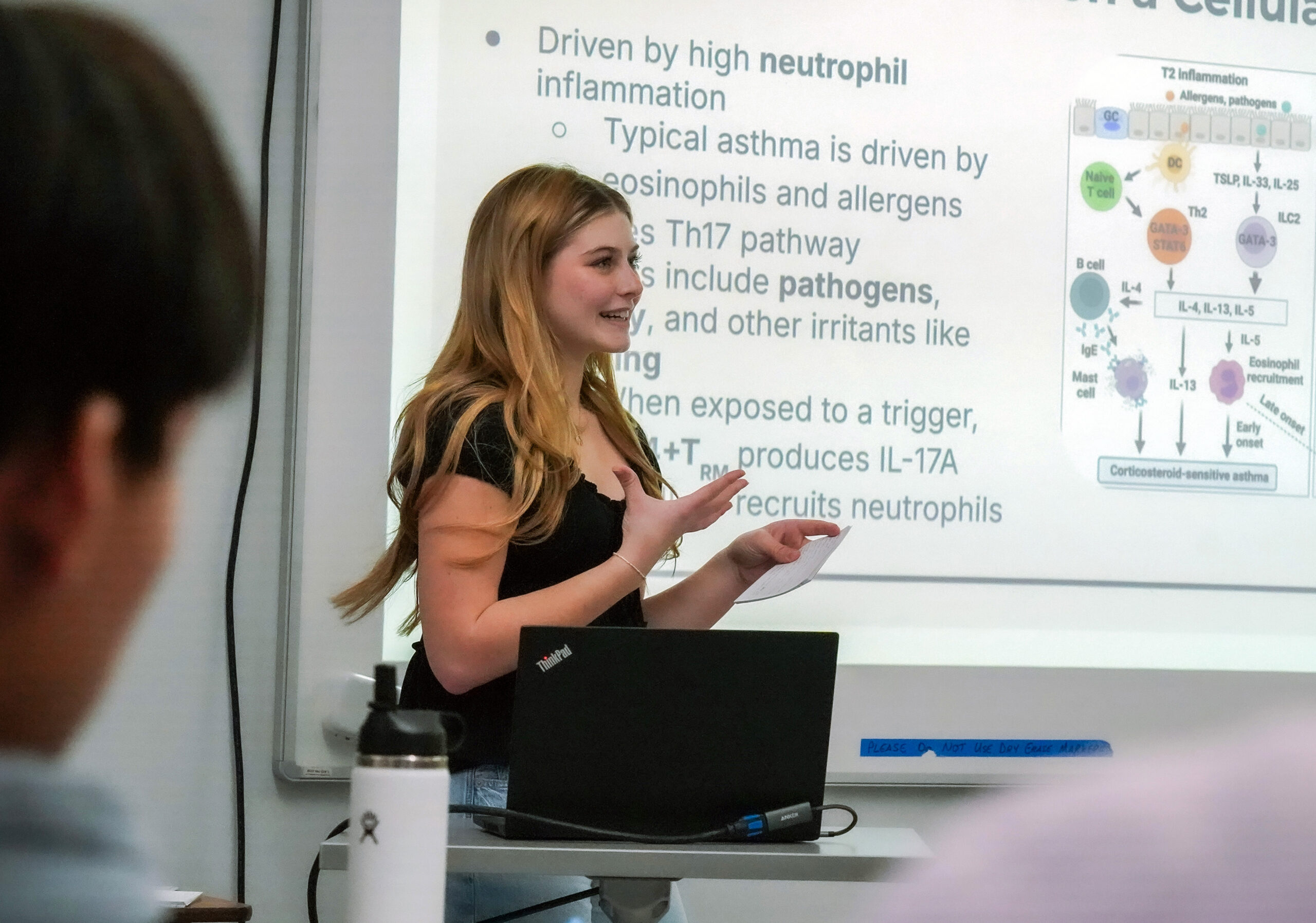
Upper School students also stepped into new leadership roles through the Peer Assistant Leaders (PALS) pilot program. Tenth-grade students worked alongside ninth graders in Leadership, Ethics, and Development (LEAD), strengthening community connections while developing mentoring skills.
Students also participated in the newly launched Can We? Project, which teaches civil discourse through meaningful conversations about real-world issues. As part of the initiative, Derryfield students welcomed students from Manchester Memorial High School for a full day of discussion, collaboration, and perspective sharing.
Leadership extended beyond students as faculty and staff established Equity and Belonging Facilitative Circles, creating opportunities for peer-led conversations that strengthen relationships and foster an inclusive community.
Investing in Teaching and Learning
Faculty members embraced new opportunities for collaboration through Professional Learning Communities (PLCs), where educators worked together toward shared goals and instructional innovation.
This year’s PLCs centered on preparing for the implementation of Portrait-Based Grading, Derryfield’s innovative approach to assessment built around the School’s Portrait of a Graduate. Throughout the year, teachers collaborated to develop common expectations and assessment practices that emphasize the durable skills students need for success beyond graduation.
Preparing Students for an AI-Driven World
As technology continues to reshape education, Derryfield remained focused on ensuring innovation enhances, rather than replaces, human connection.
Students and faculty participated in surveys measuring digital literacy and comfort with emerging technologies, while nationally recognized higher education leader Dr. Paul LeBlanc addressed the community during an Isakovich-Critz Community Enrichment presentation focused on the importance of human-centered artificial intelligence.
Behind the scenes, administrative teams explored ways AI can improve operational efficiency and strengthen the School’s daily work while keeping people at the center of every decision.
Strengthening Derryfield’s Future
The School also made significant progress toward long-term financial sustainability. Leadership completed an extensive review of ten years of expense data to ensure resources remain aligned with Derryfield’s mission and strategic priorities.
Auxiliary Programs expanded with the introduction of two new summer offerings: Arts & Design Camp, a creative experience for rising fifth through twelfth graders, and Inspirit AI, a project-based artificial intelligence program taught by graduates from Stanford, MIT, and other leading universities.
Additional initiatives included expanded alumni engagement through regional events and personal visits, the launch of the Derryfield Alumni Hall of Fame, and development of the Vision for Impact, a philanthropic framework that highlights opportunities for donors to support students, faculty, staff, and programs.
To better understand current and prospective families, the School also partnered with Hanover Research Group to gather demographic and market data that will inform future admission and marketing efforts.
Portrait-Based Grading Moves Forward
One of the most significant milestones of the first year was the continued development of Portrait-Based Grading. Designed to measure student growth through transferable skills such as critical thinking, communication, problem solving, research, and civil discourse, the model reflects Derryfield’s belief that learning extends beyond traditional content mastery.
Over the past year, faculty created more than 150 new assessment rubrics and developed department-wide learning progressions spanning grades 6 through 12. More than half of Derryfield’s teachers piloted the model in their classrooms, providing valuable feedback ahead of its full implementation during the 2026-2027 school year.
Dean of Academics Ryan Tanner-Read and Head of Upper School Laurie Byron also presented Derryfield’s work at the Index Academic Leadership Conference, where schools from across the country explored Portrait of a Graduate initiatives. Their presentation highlighted Derryfield’s leadership in innovative assessment and affirmed the School’s position at the forefront of this evolving work.
As the Strategic Plan enters its second year, these accomplishments demonstrate that the plan is more than a vision for the future. It is already shaping the everyday experiences of students, faculty, and the broader Derryfield community while advancing the School’s mission to prepare young people for lives of purpose, leadership, and impact.